



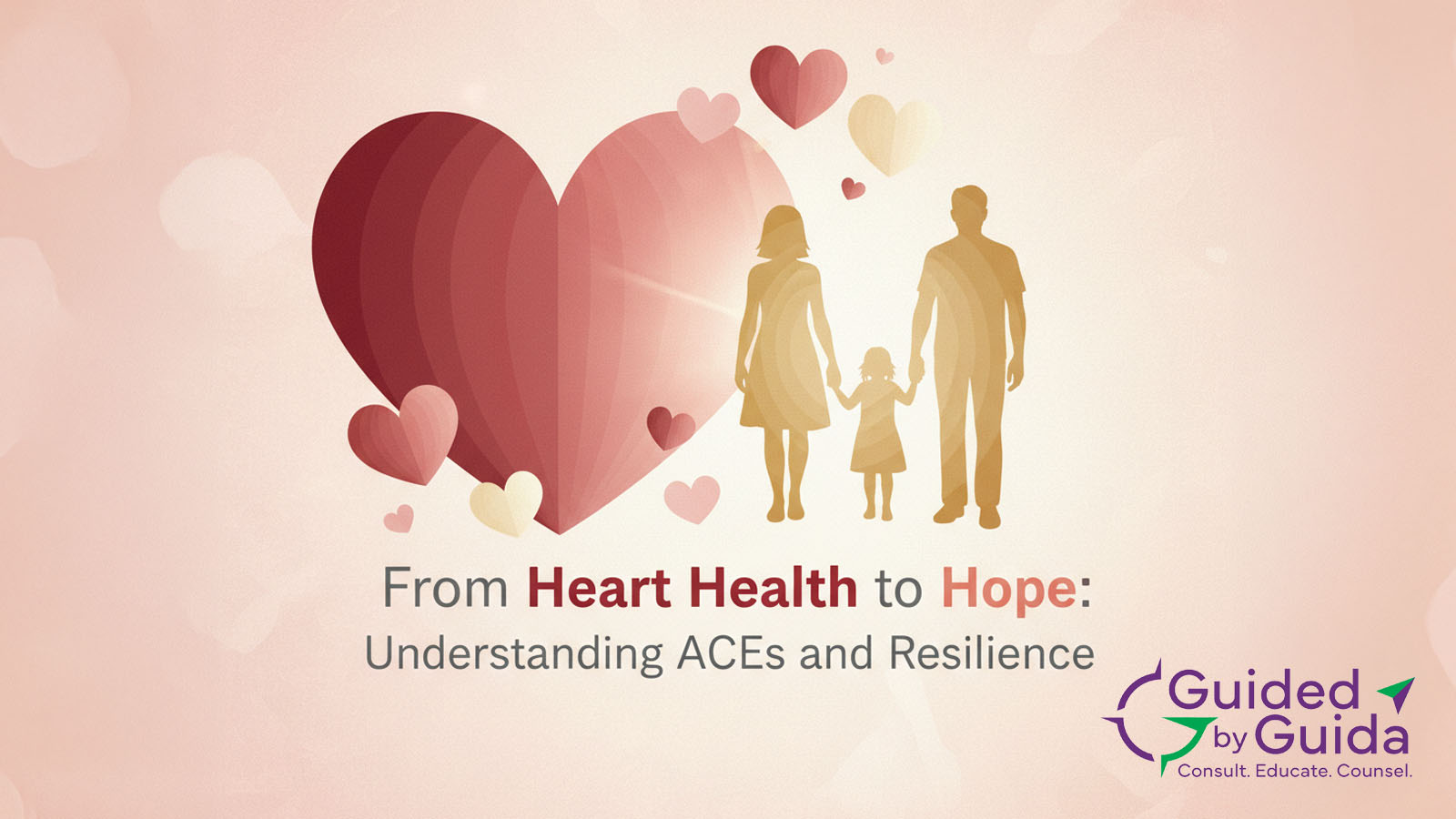

February…the month of hearts, the real ones keeping us alive in observance of American Heart Month as well as the paper ones of Valentine’s Day. We also observe Children of Addiction (COA) Awareness Week, from the 8th through the 14th, for the one in four children in the US who live with at least one parent who has a substance use disorder (SUD).
Why does it matter? The Adverse Childhood Experiences (ACE) Study was the largest study in healthcare that looked at childhood experiences and adult health. Kaiser Permanente gathered information on childhood experiences from over 17,000 adults and linked them to chronic diseases, mental health issues, and early death later in life. Fun fact: studying ACEs started because up to 50% of patients were dropping out of an obesity clinic.
The Adverse Childhood Experiences (ACE) screening recognizes that the higher the ACE score, the greater the statistical risk for developing serious long-term physical and mental health problems. But statistical risk is different than absolute risk. Having an ACE score of 0-3 – and 64% of adults have at least one – means there’s a low risk, but low doesn’t mean no risk, so if you were one of the lucky ones who grew up living in the perfect world of Sesame Street – the actual street, not the show – there is still risk for long-term physical and mental health problems. Significant risk, however, comes from having an ACE score of 4-10. (Get YOUR ACE score here: https://acestoohigh.com/got-your-ace-score/)
From the National Association of Children of Addiction, we learn that youth with a parent who misuses substances are, among other outcomes:
- Less likely to set healthy boundaries within relationships
- More likely to experience anxiety, depression, confusion, and anger
- More likely to be involved with the juvenile justice system.
For those who have an ACE score of 4-10, we know that the outcomes are even graver. With an ACE score of:
- 4 or more, an adult’s risk of developing heart disease or cancer doubles
- 5 or more, there’s an 8x greater chance of alcoholism
- 6 or more, an adult will die on average 20 years sooner.
So what’s a caring adult to do? Remember that risk, even significant risk, doesn’t lead to inevitable outcomes. That’s why all children should be taught coping mechanisms and resilience. In fact, there are a lot of adults who need that assistance, as well. Here are a few ways to build resilience:
- Make connections
- Maintain a daily routine
- Take a break
- Teach your child self-care
- Nurture a positive self-view
- Maintain a healthy perspective and hopeful outlook
Resilience – for adults and children – comes from knowing the Seven Cs:
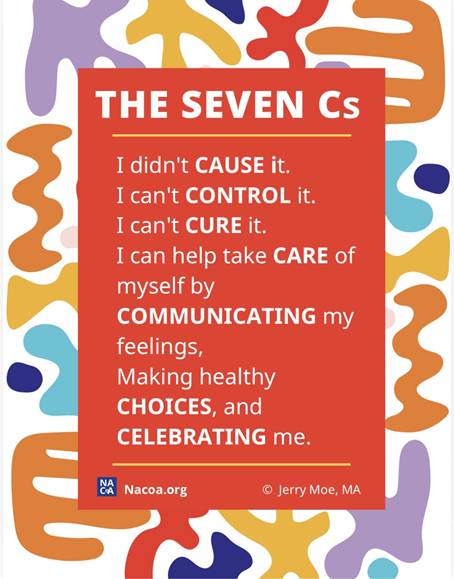
That’s why observing Children of Addiction Awareness Week can help us all!
Additional information:
- https://www.apa.org/topics/resilience/guide-parents-teachers
- https://nacoa.org/coa-awareness-week/
- https://acestoohigh.com/2012/10/03/the-adverse-childhood-experiences-study-the-largest-most-important-public-health-study-you-never-heard-of-began-in-an-obesity-clinic/
About Guida Brown & Guided by Guida
Guida Brown is the Principal for Guided by Guida and serves as the Community Relations Consultant for US Drug Testing Laboratories in Des Plaines, Illinois. She has served as an adjunct member of the faculty at Concordia University, UW-Parkside, Gateway Technical College, and Carthage College.
Having earned a bachelor’s degree in Journalism from Marquette University and a master’s degree in Management from Cardinal Stritch University, Brown made the nonprofit sector in Kenosha County her career. She was the Executive Director of the Hope Council on Alcohol & Other Drug Abuse, Inc., for over 13 years, resigning that position in June 2022. Prior to her tenure at the Hope Council, she worked as the Director of Human Resources and Training at AM Community Credit Union and Executive Director at Women and Children’s Horizons.
Brown is certified by the State of Wisconsin as a Substance Abuse Counselor, Fetal Alcohol Spectrum Disorder trainer, and Intoxicated Driver Program Assessor. She is an Associate Member of the College on Problems of Drug Dependence (CPDD) and a Junior Investigator with the Research Society on Alcohol (RSA).