



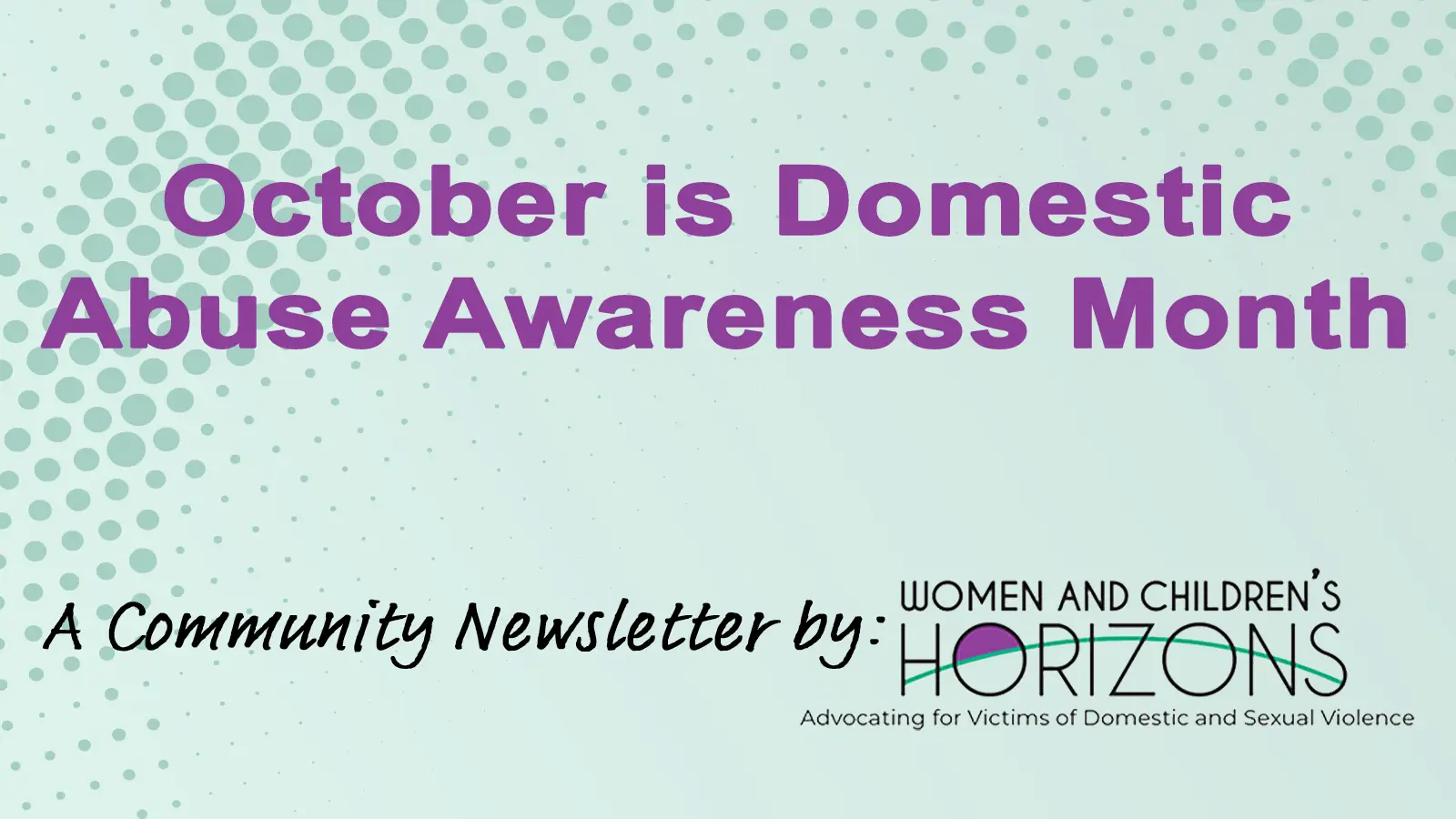

Domestic Abuse Awareness Month (DVAM) began in October 1981 with a “Day of Unity” on October 17, created by the National Coalition Against Domestic Violence (NCADV). It became a week-long observation, and then in 1987, the first DVAM was observed. Congress officially made October Domestic Violence Awareness Month in 1989. The theme for this year’s DVAM is EVERY1 KNOWS SOME1.
But first, what is domestic violence?
Domestic violence is a pattern of coercive, controlling behavior that can include physical, emotional, verbal, sexual, financial, technological, and other abuse. In addition to physical abuse, such as hitting, pushing, breaking objects, or strangulation, tactics can include isolation, threats, harassment, stalking, intimidation, humiliation, preventing employment, treating a partner like a servant, minimizing or denying the abuse, and blaming the victim for causing the abuse. It is important to note that domestic abuse is a pattern, not an isolated incident, designed by the abuser to gain or maintain power and control over their partner. Domestic abuse is not a matter of “losing control,” i.e., an anger management problem; it is about “maintaining control.” This explains why victims’ bruises are often hidden, as the abuser knows just where to hit, so they won’t be seen, or the object broken by the abuser is of particular significance to the victim. Sometimes, physical abuse is no longer necessary for the abuser to maintain control. A simple “look” sends a reminder to the victim of what could happen. Because of the pattern of abuse, the victim feels trapped by the abuser.
The relationship might be with a spouse or former spouse, boyfriend/girlfriend or former boyfriend/girlfriend, or a parent/adult child. That’s the “domestic” part of domestic abuse.
“Everyone knows someone” because domestic abuse can happen to anyone, regardless of race, age, gender, region, or sex. Domestic abuse affects all socio-economic backgrounds and education levels. It can occur between same-sex or opposite-sex partners. It not only affects the individual victim, but it also affects children, family members, co-workers, and the community at large.
Just as everyone knows someone, everyone has a role to play in preventing domestic violence and supporting survivors. End Domestic Abuse Wisconsin will release its 2024 Wisconsin Domestic Violence Report in October. According to their website (www.endabusewi.org), the organization has been researching, documenting, and publishing an annual report detailing domestic-violence-related homicides in Wisconsin since 2000. Alongside details of each homicide, the report identifies common themes, patterns, and trends. The hope is that this information can be used by community systems to better understand, intervene, and prevent abuse from happening. Please take some time in October to raise your awareness and help end domestic abuse and support survivors in our community.
About Women & Children’s Horizons
WCH’s mission is to provide support, shelter, advocacy, education, training, and healing services to victims of sexual and domestic abuse, their families, their children (who are often primary or secondary victims), and the community. We envision communities fully engaged to provide safety and to give voice to all affected by domestic abuse and sexual assault while creating the social change necessary to address its root causes. Our mission is achievable through survivor-centered work that includes strategic partnerships and collaboration. As advocates for social justice, we embrace the voices of diverse communities. We will consider any non-violent strategy that is consistent with our mission to prevent and eliminate domestic abuse and sexual abuse.