



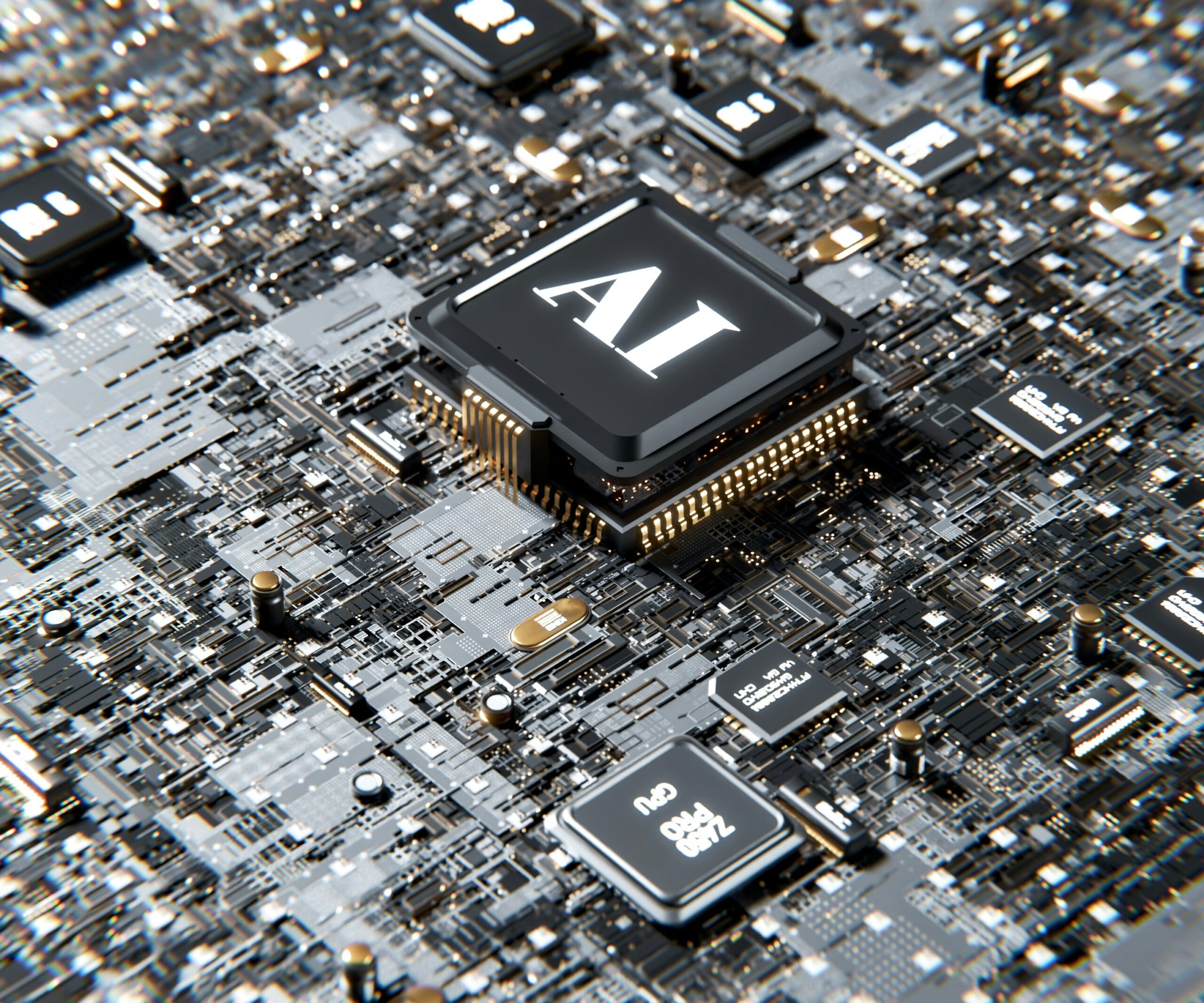

Artificial intelligence refers to employing machines or software to accomplish tasks requiring human cognition, such as learning, problem-solving, and decision-making. AI already influences daily life and work, from chatbots that respond to queries to AI headshot generators, such as Portrait Pal, that help create a polished online identity.
In fields such as finance, AI sweeps over numbers looking for patterns and hazards. In health care, it assists in organizing patient information and designing care.
Most AI software uses simple if-then rules or basic mathematical models, while some advanced types use deep learning technology to detect patterns in large data sets.
Key Takeaways
- Artificial intelligence is a broad field that includes various technologies designed to emulate human intelligence. Machine learning and neural networks are key components propelling advancements across industries.
- The range of AI learning methods, supervised, unsupervised, and reinforcement learning, powers use cases from healthcare to robotics, each with distinct advantages and constraints for practical problems.
- AI has become invisible but ubiquitous, integrated into daily life and specialized industries, enabling convenience and efficiency in everyday activities and informed decision-making. It is transforming roles in healthcare, finance, agriculture, and disaster management.
- While the progress of AI presents intricate ethical and societal issues, transparency, explainability, and bias reduction are paramount to cultivating public confidence and fairness.
- For society to reap the full rewards of AI, continuous public engagement and the alignment of innovation with common human values will be essential. This will foster a future in which AI enhances rather than supplants human expertise and decision-making.
What is Artificial Intelligence?
Artificial intelligence, or AI, is the field of computer science dedicated to creating systems that can undertake tasks requiring human intelligence. These activities encompass learning, reasoning, problem-solving, perception, and even language understanding. AI is the engine behind much of the tech we see today, from basic spam filters in our inboxes to advanced medical imagery in hospitals.
The field divides into narrow AI, which takes on particular tasks such as voice assistants or image tagging, and general AI, which would equal or even surpass a human’s wide-ranging intelligence. Almost everything that exists today is narrow AI.
AI attempts to replicate human thought and behavior, employing data and patterns to make decisions, identify trends, and learn. Machine learning plays a major role, allowing computers to learn from data with little or no interaction from humans.
1. Core Concepts
AI stands on a few basic ideas: data, algorithms, and how computers use both to solve problems. Data is the “fuel.” Without massive sets of clean, labeled data, AI can’t learn or understand the world. Algorithms are the instructions that explain to a machine how to identify patterns or make decisions from that information. Neural networks, inspired by the brain, assist AI in tackling difficult tasks such as speech or image recognition. These networks employ layers of basic units to analyze information in ways that allow them to discover subtle connections or characteristics that would be difficult to detect otherwise. This combination of data, logic, and connections defines what AI is capable of.
2. Learning Types
Using labeled data, supervised learning guides AI like teaching a child with flashcards. Unsupervised learning discovers structure in unlabeled data, such as clustering users in a market or identifying trends in social media. Reinforcement learning is more trial and error.
An AI receives rewards or penalties as it attempts to win a game or navigate a robot through a maze. Each kind suits various tasks. Supervised learning powers, among other things, email spam filters. Unsupervised learning assists with market research. Reinforcement learning fuels game-playing bots and autonomous vehicles. Each has its limitations. Supervised learning requires tons of great data, unsupervised learning is often imprecise, and reinforcement learning can be slow to train.
3. Intelligence Levels
Weak AI, known as narrow AI, tackles specific tasks, such as a chatbot or AI friends. Strong AI, known as general AI, would think and reason across multiple activities like a human.
Superintelligence would transcend human ability. Today, only weak AI exists in real life. Strong AI remains a target, not a fact. If strong AI ever arrives, it might transform work, privacy, and even law, posing profound challenges for society. In labs, AI is becoming smarter, but general, human-like cognition is still beyond us. Others expect future advances to bridge this divide.
4. Key Disciplines
AI pulls from computer science, math, psychology, and ethics. Computer science provides the means to construct and evaluate AI. Psychology assists designers in mimicking how people think, learn, and behave. Math, particularly statistics, allows AI to examine and interpret massive data sets. Ethics is important as well. AI tools should be equitable, secure, and honor privacy. Bias in data or bad design choices can hurt individuals or groups, which is why it is essential to develop AI with care.
The Invisible Integration
AI has now become an invisible integration that seamlessly slips into our days, largely under the radar. There are lots of tools and services that use AI to be good, molding our personal and work experiences in ways that feel invisible and seamless. It is in the fabric of so many small things, all designed to make things easier and quicker for people everywhere.
Daily Life
- Messaging apps leverage AI to suggest responses and tidy up grammar.
- Navigation apps select the quickest routes using live data.
- Streaming services select music or programs that are similar to your previous selections.
- Online stores recommend what you will buy next.
- AI friends help you through tough situations.
AI in smart home devices allows users to control lights, heat, and locks with their voice alone. Personal assistants such as Google Assistant and Siri respond to queries, create reminders, and organize schedules by implementing machine learning to become increasingly helpful as time goes on.
Online shopping gets slicker with AI, with stores suggesting items according to browsing patterns. AI triages infinite possibilities and closes the gap on demand. This very same logic drives content feeds on news or video sites, where algorithms select stories or clips to fit interests.
Fitness trackers and smartwatches use AI to identify patterns in heart rate, sleep, or steps. Health apps now flag odd patterns, recommend new goals, or even warn users of potential illness early, enabling people to stay healthier with less effort.
Niche Industries
Healthcare already uses AI to read scans and tests quickly and accurately. AI assists in identifying rare diseases and detecting minuscule variations in patient data that humans overlook.
Finance firms apply AI to monitor millions of trades and detect indicators of fraud prior to a loss. Algorithms run stock trades at warp speed and respond to market changes in milliseconds.
Manufacturing leverages AI for automation. Robots execute tasks with consistent accuracy. Predictive systems check machines for wear, so they can be repaired before breakdowns halt work.
Global Challenges
AI models scour climate data to anticipate storms and monitor pollution. This assists researchers in forecasting shifts and alerting populations in advance.
Disaster response teams harness AI to map damage and dispatch assistance where it is most needed. Drones, steered by intelligent systems, comb through flood or quake zones live.
On farms, AI directs watering, monitors crops, and detects pests. This makes food production smarter and less wasteful.
Education platforms leverage AI to customize lessons for various abilities or requirements, assisting students globally to stay engaged, even in regions with limited educators.
The Human-AI Symbiosis
The human-AI symbiosis reshapes how we work with machines. The concept focuses on AI systems and humans forming teams where both sides contribute strengths. AI can identify patterns in big data, and humans bring context and judgment. Researchers propose frameworks such as “Hybrid Intelligence” and “Human-AI Teaming” to steer this mixture, aiming for systems where AI could justify its decisions to humans.
Augmenting Creativity
AI assistants are now helping artists and creators push boundaries. Graphic designers utilize AI-powered tools to recommend novel layouts or palette combinations, whereas authors employ language generators for plot inspiration or revisions. Musicians sample AI-generated riffs or accompaniments to inject new sonics into their craft. In literature, AI can provide poetry or narrative synopses and act as a creative catalyst.
AI’s power in brainstorming is in digesting huge input and making diverse recommendations. This accelerates brainstorming for teams in ad, marketing, and product design. The most compelling outcomes occur when we map human taste and intent on top of AI’s rapid output. AI can initiate or polish creative content, but the result benefits from a human perspective and nuance.
Enhancing Decisions
AI shapes decisions across many domains. In business, it assists leaders in balancing large data sets prior to taking action. Predictive analytics illustrates potential trend directions and aids strategic planning. AI models could scan risk factors and assist banks or hospitals with fewer mistakes.
AI optimizes how firms anticipate customer needs and monitor market changes. This can happen because systems can discover connections that humans may overlook. Armed with clearer insights, managers can plan with greater confidence.
- Analyze large-scale datasets for hidden trends
- Reduce bias by offering objective recommendations
- Speed up scenario testing and outcome prediction
- Improve feedback loops for ongoing learning
Reshaping Work
AI is transforming job functions. It’s not simply substituting some tasks but generating entirely new ones. Certain skills, such as problem-solving and teamwork, will become increasingly sought after as tech advances. AI can manage grunt tasks like data entry or basic reporting, allowing human employees to dedicate themselves to the complicated projects.
This transition creates opportunities for novel professions in AI engineering, ethical considerations, or assistive roles. As systems get smarter, there is a demand for experts who comprehend both technology and human elements. Good design now means taking workflow, awareness, and team habits into account.
The Transparency Paradox
AI is transforming how we labor, decide, and communicate. As more organizations deploy AI for high-stakes work, the demand for transparency is more urgent than ever. The more capable these systems are, the more difficult it becomes to peer into their reasoning. This paradox sits at the center of AI adoption: users want to know why a model arrives at its answer, but the technical complexity often hides the process.
When AI decides about loans, healthcare, or hiring, a lack of transparency about its reasoning could lead to misunderstanding, mistrust, or even damage. AI must reveal its workings, eschew concealed bias, and allow users to hold creators accountable for impact if it is to serve everyone.
Explainability
Explainability is displaying in human terms why an AI took a particular action. In concrete terms, it is the capacity to trace a decision to the data and procedures the model employed. This is critical for user faith. If people do not understand why a system flagged their bank transaction or rejected a job application, it becomes difficult for them to accept the result. Take AI in healthcare as a great example. Doctors need to know how a system arrives at its diagnosis before they will trust it.
A few techniques assist. Feature importance scores indicate which input features were most influential in the decision. Visualizations, such as decision trees, open the process. Certain models, like linear regression, are inherently more interpretable than deep neural networks, which behave more like black boxes. Improved explainability does more than establish trust. It allows errors to be identified and corrected and assists companies in demonstrating compliance with regulatory or ethical requirements.
Bias
Bias can sneak into AI during training when the data used isn’t representative of real-world diversity. If an image recognition system is predominantly trained on faces from one ethnic group, it might not do so well on others. This causes unjust outcomes impacting millions. Biased hiring algorithms, for instance, might prevent good candidates from getting through due to secret signals in the data.
To combat bias, the creators must employ diverse data sets and trial outcomes across multiple populations. Periodic audits and bias detectors can catch issues early. It aims not just at equitable outcomes to maintain trust in societies that rely on these tools. Absent wide, equitable training information, AI could amplify outdated trends rather than generate fresh opportunities for all.
Accountability
Drawing clear lines of accountability is difficult when the AI autonomously decides. Who is at fault if a self-driving car makes a poor decision? The designer, the data provider, or the user. Without explicit guidelines, it is a breeze for creators to shirk responsibility.
Regulations assist by compelling companies to implement validations, maintain audits, and justify their systems upon request. Ethical principles, consented to by specialists globally, provide guidelines to comply with so that protection and human rights take priority. This is crucial to maintaining public trust and ensuring AI contributes to more good than harm.
Navigating Ethical Frontiers
AI is transforming life and labor. This expansion raises deep ethical issues. With every advance in AI comes new ethical decisions for those who develop, interact with, and manage these tools. How we address these ethical quandaries defines not just technology but the existence of billions of people around the world.
Proposed Frameworks
Lots of organizations are developing ethical AI guidelines. Case in point, the EU’s Ethics Guidelines for Trustworthy AI and IEEE’s Ethically Aligned Design. They emphasize principles such as justice, security, and respecting human involvement. Some of the top frameworks are constructed by multi-disciplinary teams with experts from tech, law, philosophy, and social sciences. Cross-pollinating these perspectives aids in identifying blind spots and reducing bias.
A simple checklist for ethical AI:
- Be clear about how AI works.
- Don’t discriminate among users, whether it be on geographic, political, or religious grounds.
- Protect user information.
- Be sure humans can intervene and fix or halt the system.
- Test bias at every level.
- Construct paths to publish issues.
- Revisit rules as tech evolves.
Ethics frameworks lead creators to tread thoughtfully with AI. They establish checks that decelerate danger before it escalates. They demonstrate to users and the public that companies are taking ethics seriously.
Global Regulations
| Region | Regulation Type | Year Enacted |
| European Union | AI Act, GDPR | 2023, 2018 |
| United States | AI Risk Management Framework | 2023 |
| China | AI Ethics Guidelines | 2021 |
Europe, China, and the US are leading the way in crafting AI regulations. They lead the way, but each of them goes his own way. It’s hard to make a single set of rules for the entire world as countries differ in their laws, values, and even usage of tech.
Hard guidelines protect, but too many restrictions stifle innovation. The best laws find a balance with strong guardrails and space to build and learn.
Future Dilemmas
AI could soon decide for itself, raising new dilemmas. As these systems become more intelligent, they could end up crossing boundaries we had not anticipated. Privacy is one concern. AI can identify faces in crowds, follow online behaviors, or listen to voices. This strength can help locate missing individuals or combat crime, but it can also surveil individuals too tightly without their consent.
It’s harder to keep humans in control as AI expands. More decisions and quicker reasoning by machines can keep humans out of the loop. If an AI makes the wrong call, who’s to blame? When AI decides who receives a loan or a job, bias has a way of sneaking in. If we don’t audit these systems frequently, minor mistakes can escalate into significant damage.
AI alters decision trust. If no one can articulate why a system did something, trust falters. Yes, a few of them might disappear as AI handles stuff that used to require people. This can assist some populations but damage others.
Beyond the Algorithm
AI doesn’t just transform technical workflows; it influences the way people perceive their world, learn, and engage. AI’s ascent demands a humanist response focused on social consequences, changes in cognition, and foresight. The worth of human cognition, in all its prejudice and mistakes, serves as a counterweight to algorithmic reasoning.
Social Impact
AI has the potential to make societies fairer. Tools that read or translate speech can assist the disabled or cross language gaps. AI can identify bias in hiring or aid early detection of disease, assisting those who might have otherwise been overlooked. Yet, the very same systems can widen divides if their sources or structure echo outdated prejudices. A facial recognition model that performs well on one demographic group but performs poorly on another demonstrates how effortlessly old issues can take root in code.
Other locations deploy AI to monitor individuals or manage communication. This may endanger liberty. To ensure AI benefits more than it hurts, communities must have a genuine voice in how AI is developed and deployed. It’s not just about policy. It’s about engineering tools to benefit the masses, not the elite.
Cognitive Shifts
AI transforms cognition. Search engines and smart assistants provide answers quickly, but they increase the danger of forgetting the skills of old, like memorizing information or solving problems independently. The convenience of having AI do the heavy lifting can even alter what humans themselves esteem.
AI can assist human development. It can reveal novel trends in massive data sets or decode languages in ways humans can’t compete with in speed. The human heart mixes reason, sentiment, and the imponderable. Errors don’t just happen; they make a statement of education. AI’s ascent requires users to maintain the equilibrium and treat AI as an instrument, not a crutch. Learning traditions, such as debate or apprenticeship-style practice, are as important as ever.
Long-term Vision
AI may define everything from health care to art. For what lies ahead, if anything, has to be a matter of aligning advancement with humanity—equity, dignity, and the grace of imperfection. Innovation requires open conversation among engineers, users, and the excluded. Human thought, informed by emotion and the constraints of language, infuses significance beyond the syntax. Continued discourse and community reaction will steer AI’s position in society.
Conclusion
Artificial intelligence continues to redefine life and work. Easy things like AI friends, such as Candy.ai, Kindroid.ai, or smart cameras, already seem normal. AI assists in categorizing information at a much speedier rate, identifying patterns quickly, and increasing productivity.
Humans and AI now collaborate closely. This combination introduces fresh promise and fresh danger. Explicit guidelines and frank discussions go a long way. Every step, tiny or giant, defines the future of tech.
Frequently Asked Questions
What is artificial intelligence?
Artificial intelligence (AI) refers to technology that enables machines to carry out tasks that typically require human intelligence. These tasks include learning, problem-solving, and language comprehension.
How is AI integrated into daily life?
AI is embedded invisibly into utilities like search engines, translation apps, and recommendations. We’re using AI every day without even realizing it.
How do humans and AI work together?
Humans and AI complement each other by marrying human creativity with AI’s data processing speed. It is a collaboration that accelerates problem-solving and enhances decision-making.
Why is AI transparency important?
Transparency in AI assists individuals in comprehending the decision-making process. It fosters trust and empowers users to understand how AI shapes their lives.
What are the ethical concerns with AI?
Ethical issues encompass data privacy, fairness, and effects on employment. We must ensure AI is used responsibly and benefits all.
Can AI make decisions on its own?
AI can decide based on data and algorithms. Human supervision is often required to steer and audit these choices.
What lies beyond current AI algorithms?
Looking past today’s AI, researchers are exploring systems able to reason, adapt, and learn more like humans. This aims to make AI safer and more helpful for everyone.